01
Weight
Less stone in the section: fewer kilos on floors, furniture and structures.

Lightweight marble · Slabs on honeycomb backing
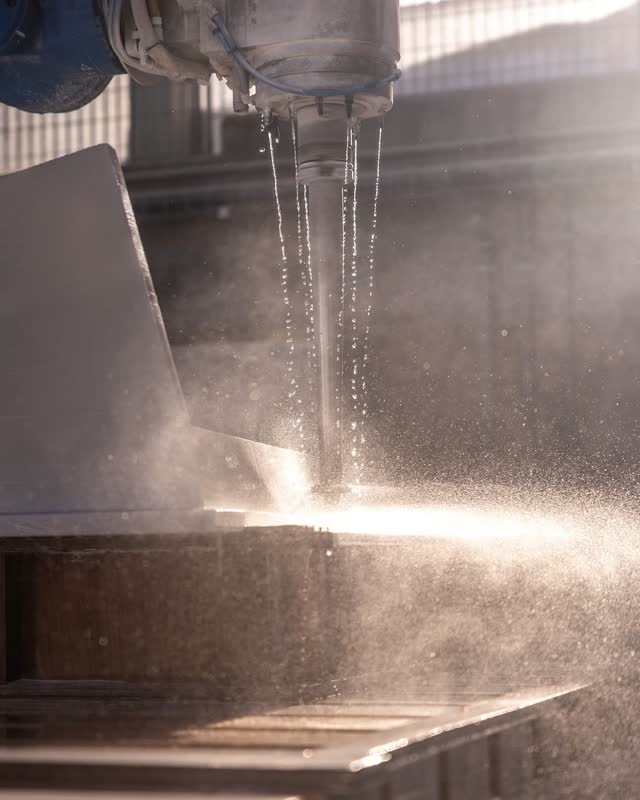
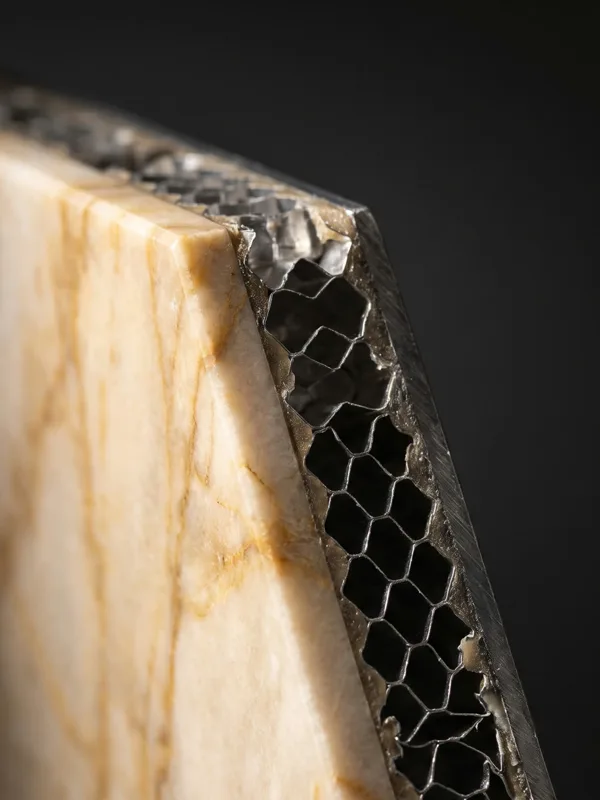
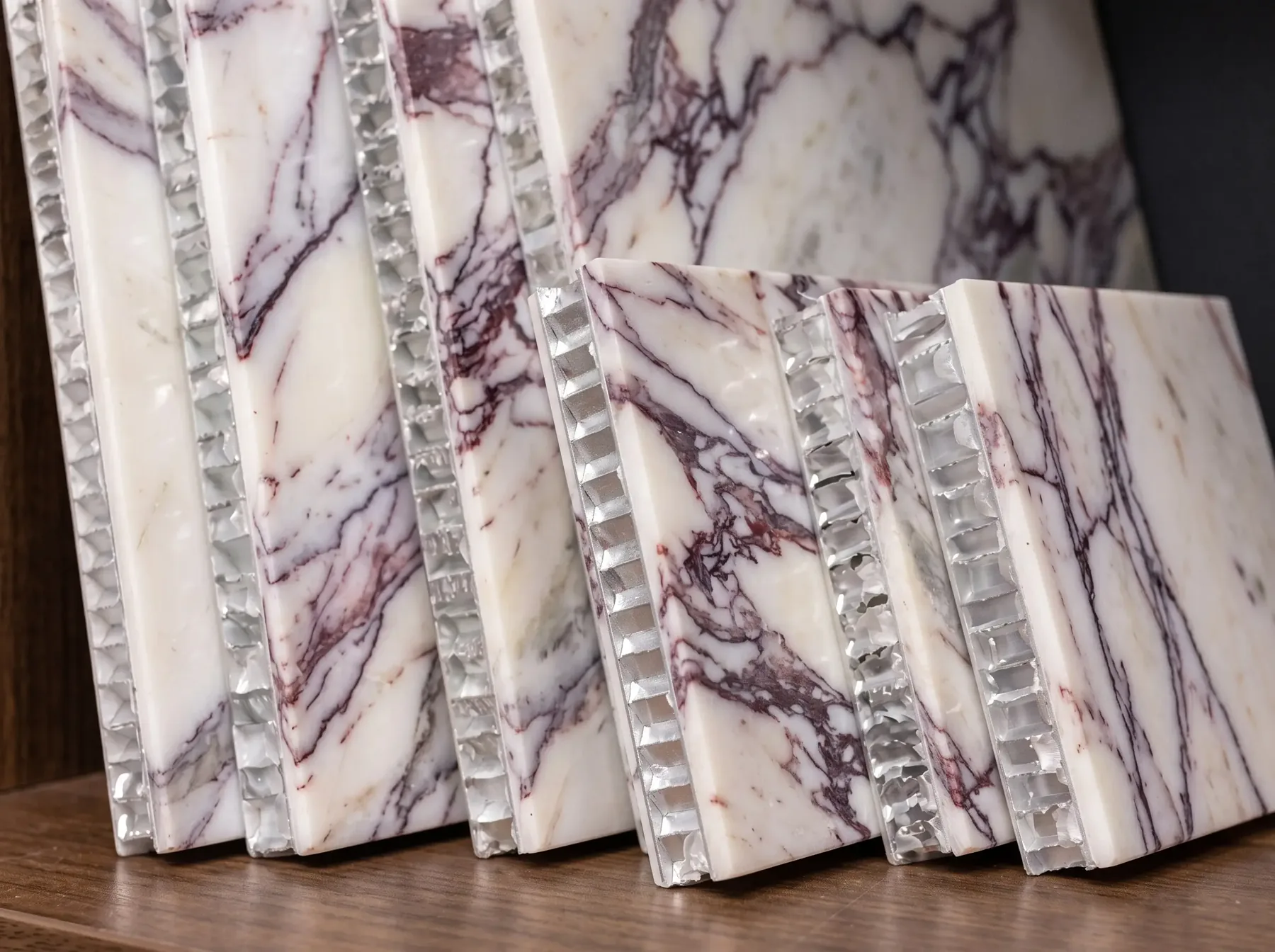
We bond honeycomb to both sides of the slab, split it with the shaping wire — one slab, two panels — and calibrate it down to 3 mm when the material allows. The surface stays stone. The cross-section gets engineered.
The cross-section
No marble-effect porcelain, no films: the visible layer is cut from a real slab.
The slab is chosen at the warehouse and analysed: material, veining, size, intended use.
Honeycomb is bonded to the slab on both sides
The shaping wire splits the slab, cutting it through the middle
Each panel is calibrated — down to 3 mm when the material allows — then edges and finishes.
It is a composite panel of real natural stone — and it must be designed as one.
The advantages
Less stone in the section: fewer kilos on floors, furniture and structures.
A few millimetres: stone fits where there was no room for it.
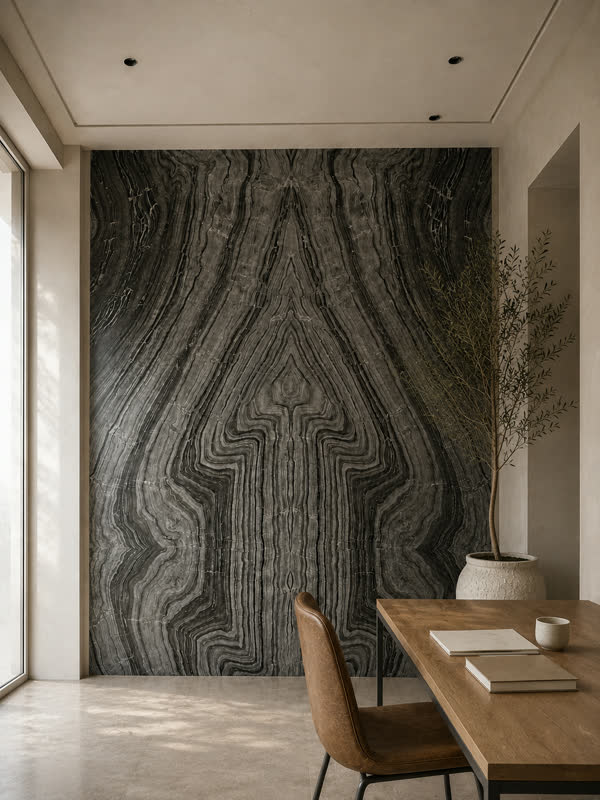
Real surface and veining. Everything else just imitates them.
The split doubles the slab: same stone, two faces.
Hinges and runners move far less weight, at every opening.
Easier transport and installation, depending on size and project.
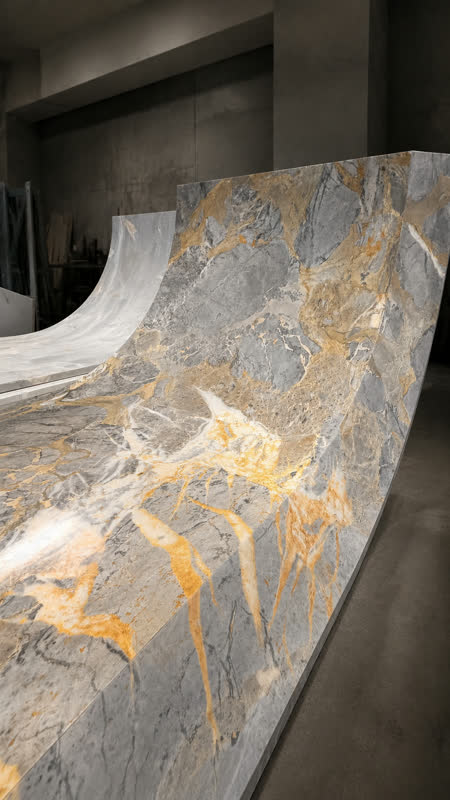
And then: backlighting of barely translucent stones · curved surfaces built from the slab
Applications
On board, every kilo must earn its place: weight adds up with space, structure and handling. Lightweight marble makes real stone an option for cabins, bathrooms, walls, floors, doors and furniture of yachts and vessels — refits included, where the constraints are already fixed. The panel is developed on the specific project, together with the shipyard or the studio signing it.
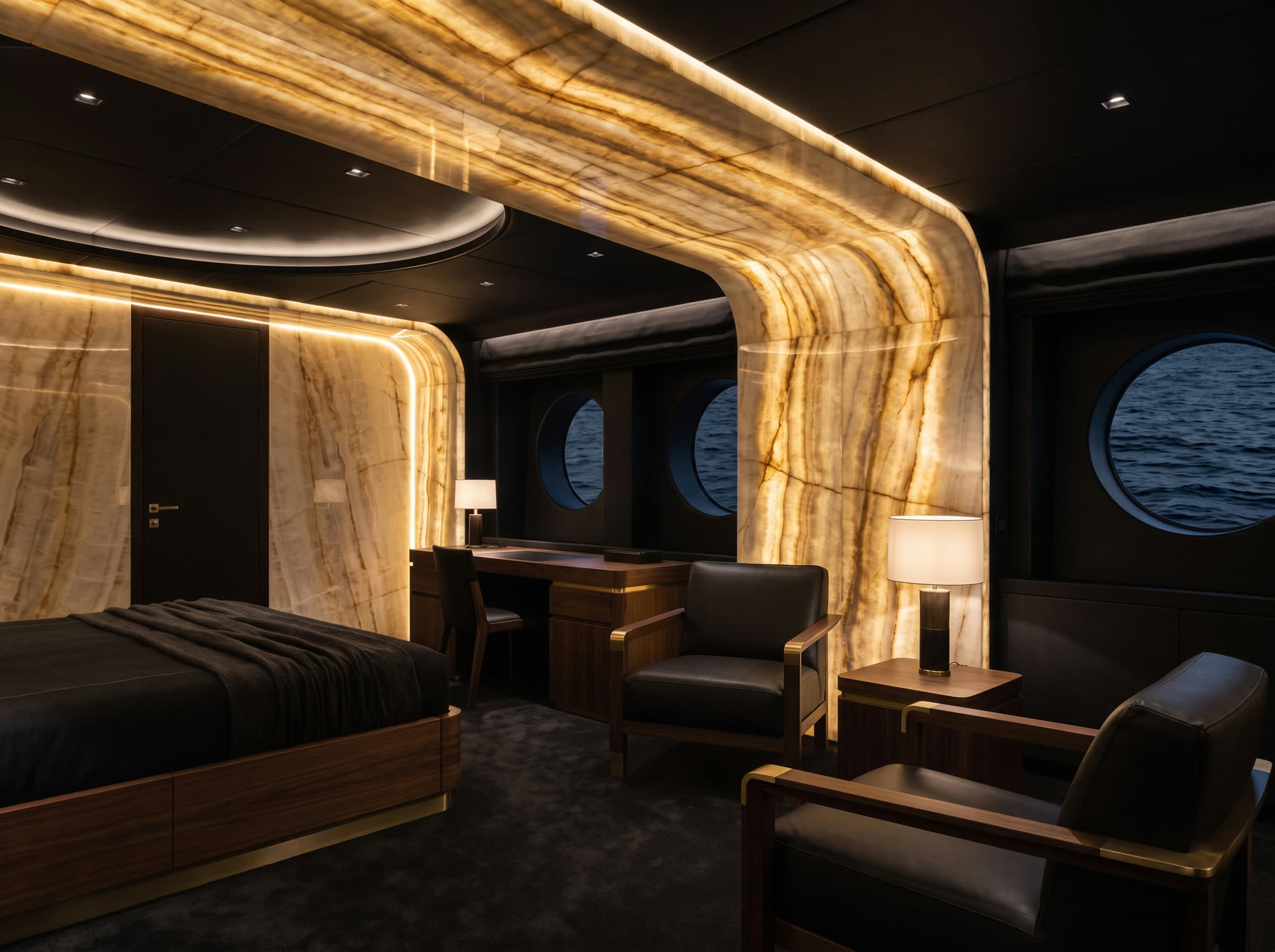
Where weight limits are the strictest of all, real stone usually isn't even considered. With a few millimetres of stone on a technical backing, it becomes a possibility worth studying for decorative panels, surfaces and furnishings of private jets. For aeronautical applications the panel must be developed and verified against the project's technical specifications.
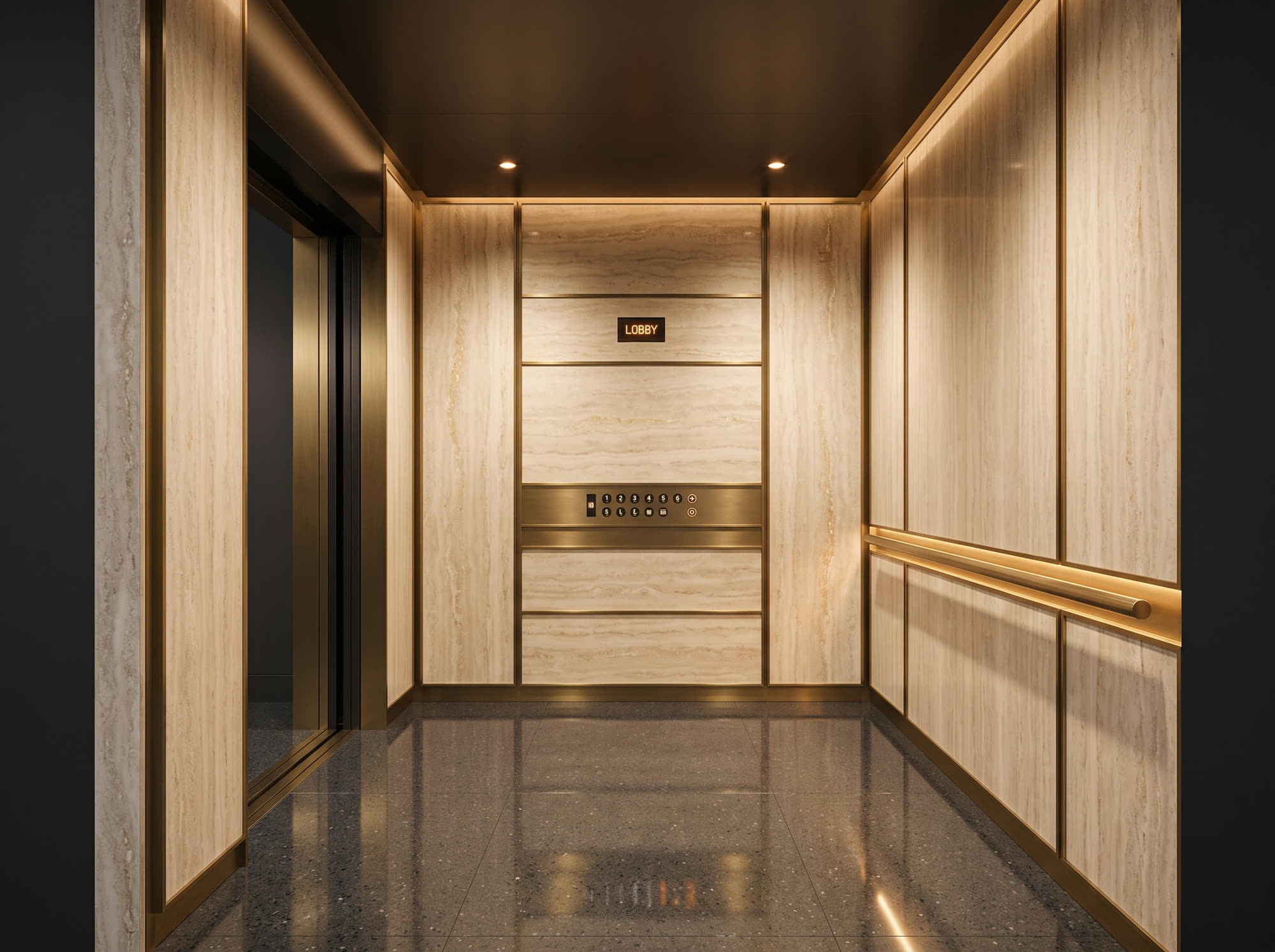
The cab has a binding load limit and counted technical clearances: two limits full marble usually fails. With reduced weight and thickness, walls, doors and panels in real stone become an option even when renovating an existing elevator — where the structure is what it is, and doesn't change.
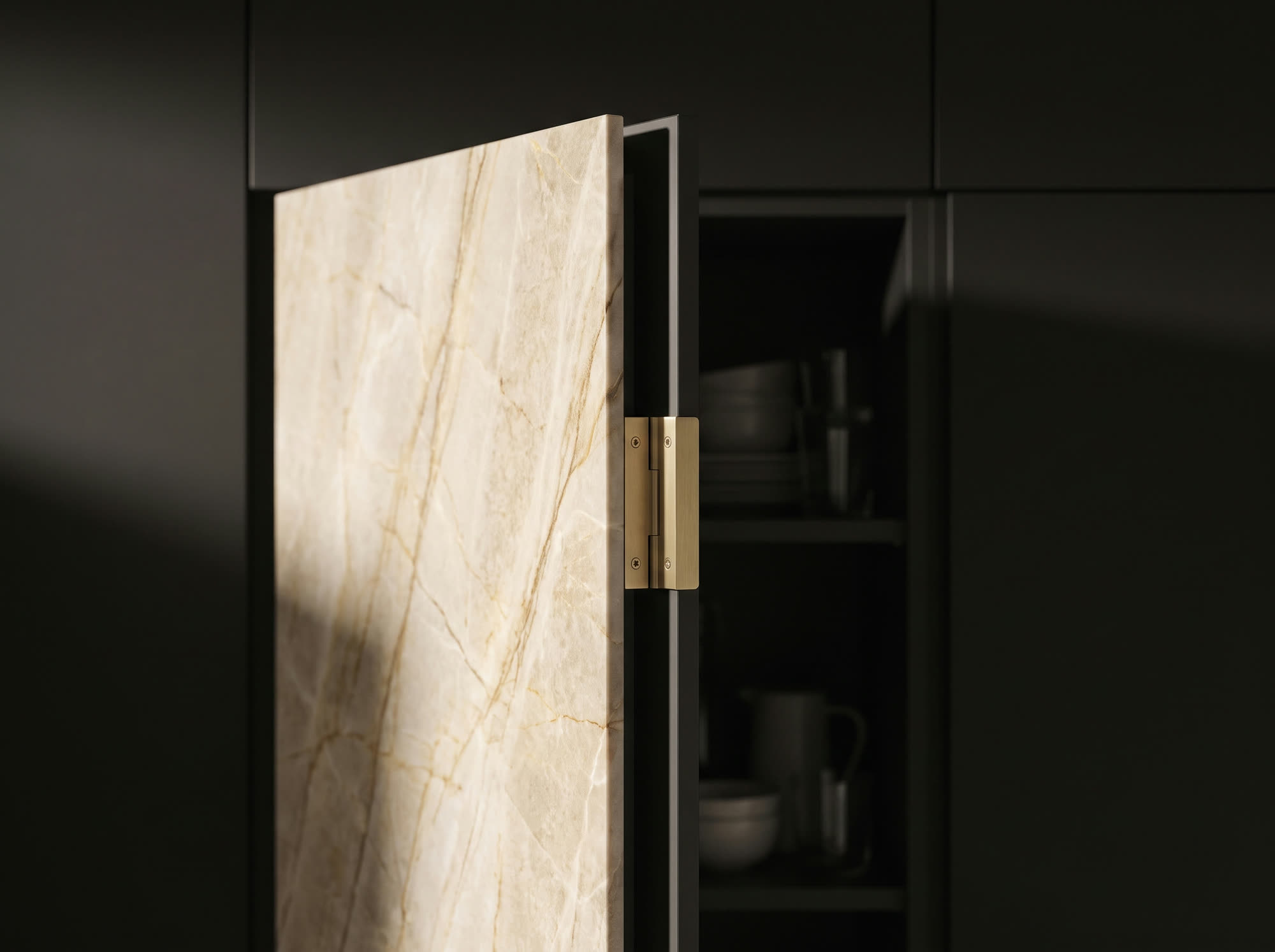
Real stone, even on the parts that move.
Kitchen and wardrobe doors, drawer fronts, doors, sliding elements: here weight is not an abstract number, it is the load that hinges, runners and mechanisms must move at every opening.
If you are hunting for stronger mechanisms and hinges to hold a heavy door, there is a second road: make the door lighter. With the stone reduced to a few millimetres on honeycomb backing, a real-stone door returns to a weight range that the furniture's standard hardware handles without strain — and the project stops chasing special components. The panel is drawn with the furniture: dimensions, edges, fixings.
Backlighting
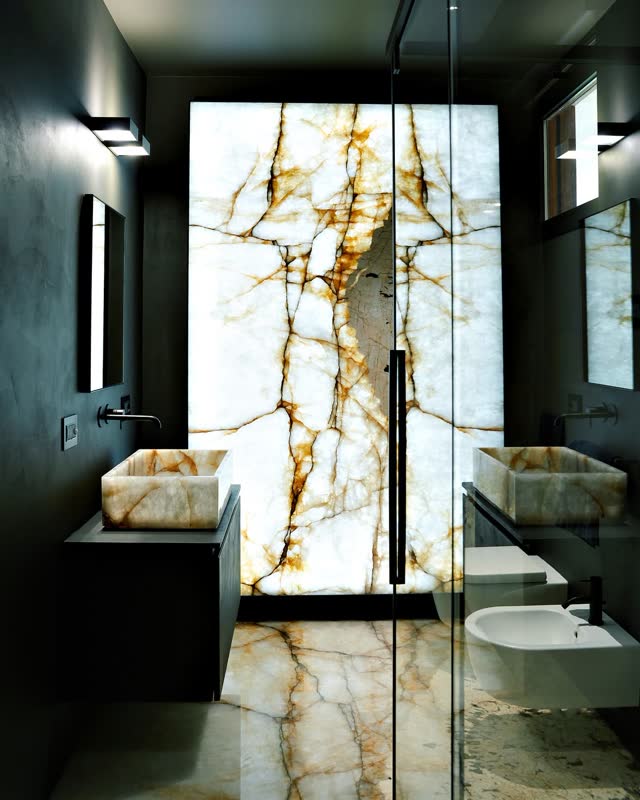
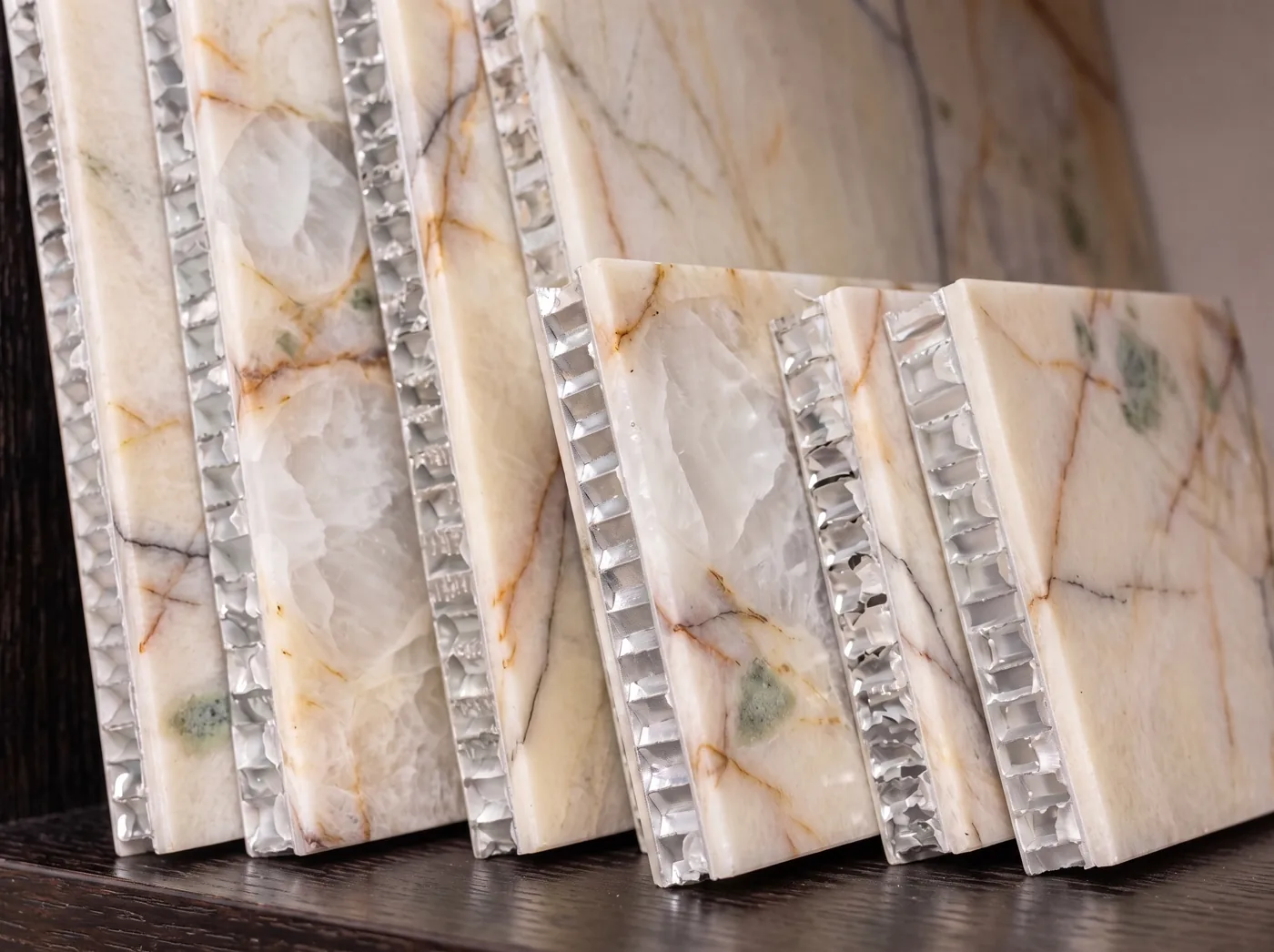
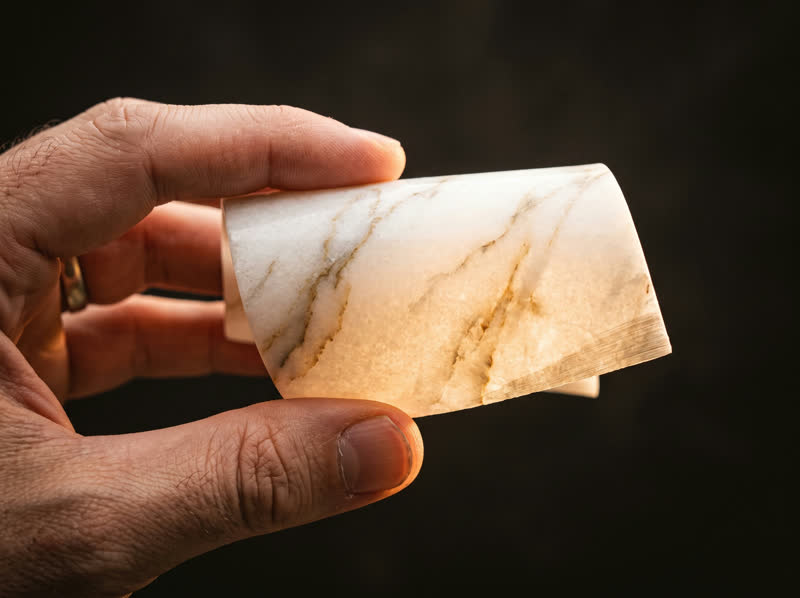
At a few millimetres, light starts passing where it didn't: some stones normally considered barely translucent become worth assessing for backlighting. In the photograph, a real sample brought down to a few millimetres lets light through — the check is always done on the individual slab, lit.
The comparison
The lightweight panel doesn't replace the full slab: it stands beside it. Where weight is no constraint, the traditional slab often remains the simplest choice; where the project imposes limits, the panel opens doors that stayed shut.
Worktops, floors, cladding where weight is no constraint, elements from the solid: there the classic calibrated slab — or solid marble — is often the most direct road.
Yachts and marine, elevators, doors and moving parts, walls and ceilings with load limits, large formats to handle, renovations with minimal clearances — and the projects where stone seemed ruled out from the start.
Frequently asked questions
It is a composite panel: a layer of real natural stone bonded to a technical honeycomb backing. The visible surface remains stone, with its real veining; the cross-section is engineered to cut weight and thickness compared with a full slab.
Real stone. It is not marble-effect porcelain, laminate or decorative film: the visible layer is cut from a real slab, chosen at the warehouse. Surface, veining and depth are those of natural stone — what "marble-effect" materials can only reproduce.
Honeycomb is bonded to the slab on both sides; then the slab is split: the shaping wire cuts it through its thickness, and one slab yields two panels. Each is then calibrated to the project's dimension, with the backing stabilising the stone.
When the stone's characteristics and the intended use allow it, we go down to 3 mm. It is not an automatic figure: compactness, veining, size and application are weighed together, slab by slab. No catalogue number replaces the check on the real material.
The finished panel is rigid: it must not be bent on site. The design adapts to the geometry, not the panel by flexing. For curved surfaces there is a dedicated technique — curved marble — in which the shape is built, not forced.
Yes, and it is one of the applications where the weight cut pays off most: reducing the cladding's weight reduces the load that hinges, runners and mechanisms must move at every opening. The panel is designed together with the furniture: dimensions, edges and fixings.
The way to lighten a stone door is to reduce the stone's own thickness: the lightweight panel brings the visible layer down to a few millimetres, carried by the honeycomb. The question often arrives the other way round — which hinges can hold such a heavy door? — but reducing the door's weight reduces the load that hinges, runners and opening systems must move, and often avoids hunting for non-standard hardware. Sizing still needs checking with the furniture maker: it depends on format, opening type and chosen hardware.
Yachting is the field that most often calls for this technique: on board, weight is weighed together with space, structure and handling, and the panel is developed on the specific project. For aeronautical applications one more rule applies: the panel must be developed and verified against the project's technical specifications.
Yes: cabs, walls and doors are typical applications, because the cab's load limit and the technical clearances are binding. Reduced weight and thickness make real stone an option even when renovating an existing elevator, where the structure stays as it is.
It is one of the most requested destinations — cladding, suspended ceilings, large surfaces. Not on just any substrate, though: wall, substructure, format and fixing system must be checked on the real project before the panel is defined.
Reducing the thickness can increase the light passing through the stone: some barely translucent stones become worth considering. Feasibility is checked on the individual slab, lit — all the details on the backlit marble page.
The reduced weight can make transport, handling and installation easier, depending on size and project. They remain operations to plan on the real site — which is why we follow the project through to installation.
Yes. We start from technical drawings, 3D files or a sketch; we design panel, edges, joints and fixings, and follow the project through to installation — with the dry lay in the factory before delivery, when the assembly calls for it.
Send us material, dimensions, drawing and intended use: we'll work out the thickness, backing, edges and fabrication needed to build the panel.